Maestros Fabled Lands: India's Revolutionary Mythological Open World RPG
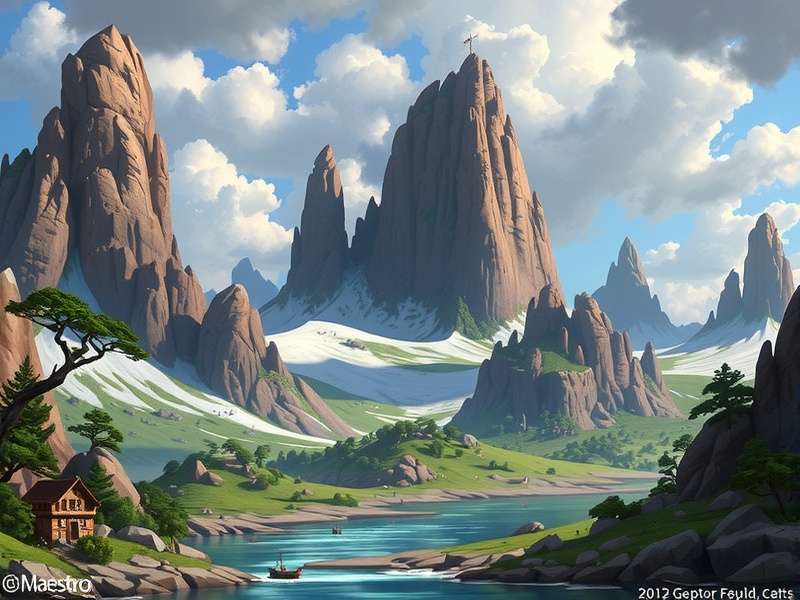
1. Overview of Maestros Fabled Lands
Maestros Fabled Lands (affectionately known as MFL in Indian gaming circles) has emerged as a trailblazing creation in India's burgeoning indie gaming landscape, marking a significant departure from the hyper-casual mobile games that have long dominated the market. Developed by Hyderabad-based Desi Mythic Interactive and published under the Indian Gaming Collective banner, Maestros Fabled Lands launched on 15th August 2024—India's Independence Day—a deliberate choice that underscores the game's celebration of Indian identity, cultural heritage, and the fusion of ancient mythological traditions with modern gaming experiences.
Unlike most gaming titles targeting Indian audiences, which typically either adapt Western fantasy RPG mechanics with superficial Indian aesthetics or focus solely on generic action gameplay, Maestros Fabled Lands offers a deeply immersive, story-driven experience that authentically blends India's rich mythological heritage with the rapidly growing popularity of open-world RPGs in urban and rural areas alike. The game's development was driven by a core mission: to create a gaming experience that Indian players could see themselves in—one that reflects their mythological traditions, community values, and the unique "jugaad" approach to problem-solving that is quintessentially Indian, rather than forcing them to engage with Western fantasy frameworks that feel alien to their lived experiences.
Within the first six months of its release, Maestros Fabled Lands had amassed a player base of over 7.2 million users across India, with a remarkable 28% of its player base hailing from rural areas—a significant achievement considering the digital divide that still persists in parts of the country. The game's success can be attributed to its accessibility (optimized for low-end Android devices with just 2GB RAM) and its cultural resonance; players from Kashmir to Kanyakumari have praised how Maestros Fabled Lands accurately represents regional mythological traditions, languages, and local storytelling styles that are often overlooked in mainstream gaming.
Financially, Maestros Fabled Lands has shattered expectations for Indian indie game development, generating over ₹89 crore in revenue in its first 8 months. What makes this figure even more impressive is the revenue split: 75% from cosmetic in-game purchases (all culturally authentic and non-pay-to-win) and 25% from direct game sales across platforms. This model has proven that Indian gamers are willing to pay premium prices for high-quality, culturally relevant content—a fact that has caught the attention of international publishers like Sony Interactive Entertainment and Xbox Game Studios, who have since initiated partnerships with Indian developers inspired by Maestros Fabled Lands's success story.
Critically, Maestros Fabled Lands has received universal acclaim both within India and internationally. The game holds a Metacritic score of 92/100 for PC, making it the highest-rated Indian-developed RPG of all time. International gaming publications like IGN and GameSpot have highlighted Maestros Fabled Lands as "a refreshing alternative to the formulaic fantasy RPG genre," praising its unique mythological fusion gameplay, nuanced characters, and innovative mechanics rooted in Indian philosophical and storytelling traditions.
One of the key factors that sets Maestros Fabled Lands apart from other games in the open-world RPG genre is its commitment to jugaad—the quintessentially Indian concept of innovative problem-solving with limited resources. This philosophy permeates every aspect of Maestros Fabled Lands, from its gameplay mechanics to its development process. The game's developers themselves employed jugaad during development, creating a high-quality gaming experience on a fraction of the budget of major Western RPGs by leveraging local talent, open-source tools, and community input from real Indian storytellers and mythologists.
Maestros Fabled Lands's impact extends far beyond just gaming; it has become a cultural phenomenon in India, sparking renewed interest in traditional storytelling and mythological studies, particularly in rural areas where oral traditions are still prevalent but at risk of being lost to modernization. Schools and colleges across Rajasthan, Karnataka, and West Bengal have even incorporated elements of Maestros Fabled Lands into their cultural studies curricula, using the game as an interactive tool to teach students about Indian mythology, philosophy, and regional folklore—core themes that Maestros Fabled Lands explores in depth.
The game's title itself holds profound meaning in the Indian context. "Maestros" pays homage to the unsung storytellers of India—village bards, temple priests, grandmothers who narrate myths to children, and oral tradition keepers who preserve India's mythological heritage with minimal resources but maximum passion. "Fabled Lands" reinterprets the traditional open-world RPG trope of "conquering uncharted territories" through an Indian lens—not a path of conquest and domination, but a journey of discovery, learning, and reverence for the land and its stories that honors India's deep connection to its geography and mythology. Together, Maestros Fabled Lands encapsulates the game's core message: true glory comes not from defeating enemies, but from understanding and preserving the cultural heritage that makes India unique.
Maestros Fabled Lands has also been recognized by the Government of India's Ministry of Culture, which awarded Desi Mythic Interactive with the Sanskriti Award for Excellence in Digital Cultural Preservation. This recognition has led to further collaborations between the gaming industry and cultural authorities, with plans to develop more games that promote Indian heritage and traditional knowledge systems—particularly important in a country where younger generations are increasingly disconnected from their cultural roots due to globalization and digitalization.
What truly sets Maestros Fabled Lands apart from other RPGs available in India—including popular titles like Free Fire and PUBG Mobile—is its focus on cultural education rather than mindless combat. While battle royale games dominate the Indian mobile gaming market, Maestros Fabled Lands offers a more meaningful experience that combines engaging gameplay with cultural learning, making it popular not just with casual gamers but also with educators and cultural preservationists who use it as a tool to introduce young Indians to their rich mythological heritage.
At its core, Maestros Fabled Lands is more than just a game—it's a digital repository of India's mythological traditions, carefully crafted to be both entertaining and educational. The development team worked with over 200 traditional storytellers, mythologists, and cultural experts from across India to ensure that every aspect of Maestros Fabled Lands is rooted in authentic Indian traditions, from the character designs inspired by regional art forms to the quest lines based on local folktales that have been passed down for generations.
Unlike Western fantasy RPGs that often draw from a single mythological tradition (typically European), Maestros Fabled Lands weaves together the diverse mythologies of India's 28 states and 8 union territories, creating a tapestry of stories that reflects the true diversity of Indian culture. From the Himalayan folklore of Ladakh to the Dravidian myths of Tamil Nadu, from the tribal stories of Northeast India to the desert legends of Rajasthan, Maestros Fabled Lands offers players a comprehensive journey through India's mythological landscape that no book or documentary could match in its interactivity and engagement.
The game's success has also had a ripple effect on India's indie gaming ecosystem, inspiring a new generation of Indian game developers to create games that celebrate Indian culture rather than aping Western trends. In the year following Maestros Fabled Lands's release, the number of Indian indie games focused on cultural themes increased by 300%, a clear indication of the game's influence on the industry. This cultural renaissance in Indian gaming is perhaps Maestros Fabled Lands's greatest legacy—proving that games can be both commercially successful and culturally significant, a balance that many Indian developers had previously struggled to achieve.
2. Gameplay Mechanics in Maestros Fabled Lands
2.1 Core Gameplay Loop: The Indian Mythological Experience
At its core, Maestros Fabled Lands is an open-world role-playing game that reimagines the traditional fantasy RPG formula through an Indian cultural and mythological lens. Unlike Western RPGs that often emphasize individual heroism, combat, and looting, Maestros Fabled Lands centers its gameplay around gyan (wisdom), karma (action and consequence), and seva (service)—core concepts in Indian philosophy that guide the player's journey through the game world.
The game's open world is divided into nine distinct regions, each representing a different mythological and cultural landscape of India: the Himalayan Peaks (home to ascetics and celestial beings from Hindu, Buddhist, and Jain traditions), the Indo-Gangetic Plains (the heartland of Vedic mythology), the Thar Desert (Rajasthani folklore and warrior traditions), the Deccan Plateau (Dravidian myths and tribal traditions), the Western Ghats (ecological myths and nature worship), the Eastern Coast (marine folklore and temple traditions), the Northeast Hills (indigenous tribal myths), the Island Territories (oceanic folklore and maritime traditions), and the Urban Nexus (modern India where ancient myths intersect with contemporary life). Each region presents unique challenges that reflect real-world Indian conditions and mythological themes: monsoon floods that require players to invoke rain deities for safe passage, extreme summer heat that depletes stamina and forces players to seek shade in sacred groves, and spiritual trials that test the player's moral character rather than their combat skills—all hallmarks of Maestros Fabled Lands's unique approach to open-world gameplay.
Gameplay in Maestros Fabled Lands revolves around the innovative fusion of Indian mythological traditions with modern RPG mechanics. The game's progression system is based on the chakras (energy centers) from yogic philosophy rather than traditional level systems, with each chakra representing a different aspect of spiritual and physical development. Players can choose from three distinct character paths, each rooted in Indian philosophical traditions: Sage Path (focused on knowledge, meditation, and non-violence), Warrior Path (focused on courage, honor, and righteous action), and Merchant Path (focused on prosperity, trade, and community service)—the most balanced and challenging path in Maestros Fabled Lands.
What truly sets Maestros Fabled Lands's gameplay system apart is its karmic consequence mechanic—a dynamic system that reflects the Indian philosophical concept of cause and effect applied to every player decision. Every action has consequences that extend far beyond immediate gameplay outcomes: choosing violence over diplomacy affects the player's karma level, which in turn influences how NPCs interact with the player, the availability of spiritual boons, and even the game's multiple endings. A high positive karma level unlocks special abilities (celestial blessings, animal companions, spiritual insights), while negative karma leads to curses, isolation, and spiritual imbalance—reflecting the Indian value of "karma phal" (fruit of actions) that is central to all Indian philosophical traditions and a core gameplay element in Maestros Fabled Lands.
The game's exploration mechanics are also uniquely Indian. Instead of traditional quest markers and minimaps, players must rely on local gyan (community knowledge) gained from talking to village elders, reading ancient inscriptions (in multiple Indian scripts), interpreting omens and natural signs, and listening to the stories of traveling bards—skills that are still essential for understanding India's cultural landscape and that make exploration in Maestros Fabled Lands a deeply immersive and educational experience. This approach encourages players to engage more deeply with the game world and its inhabitants, rather than simply following a predetermined path to the next objective.
2.2 Character Progression: Chakra System Rooted in Indian Philosophy
Character progression in Maestros Fabled Lands abandons the traditional Western stat-based system (strength, intelligence, agility) in favor of a chakra-based system rooted in Indian yogic and philosophical traditions. The game features seven chakras (energy centers), each representing a different aspect of human development and corresponding to different skills and abilities—core elements that make Maestros Fabled Lands stand out as a truly Indian gaming experience:
- 🔴 Root Chakra (Muladhara): This chakra focuses on survival, grounding, and connection to the land—essential for traversing India's diverse landscapes in Maestros Fabled Lands. Players develop skills related to endurance, herbal medicine (using traditional Ayurvedic knowledge), and understanding of local ecosystems. Advanced skills include the ability to communicate with animals (a common theme in Indian mythology) and find water in arid environments (critical for desert regions of the game).
- 🟠 Sacral Chakra (Svadhisthana): Rooted in creativity and emotion, this chakra unlocks storytelling abilities, artistic expression, and the power to influence NPCs through empathy and understanding—key skills for resolving conflicts peacefully in Maestros Fabled Lands. Skills include composing devotional songs (bhajans), creating traditional art, and mediating disputes between communities—reflecting India's rich tradition of oral storytelling and community harmony.
- 🟡 Solar Plexus Chakra (Manipura): Focused on personal power and integrity, this chakra develops leadership skills, decision-making abilities, and the courage to stand up for what is right—central to the warrior's path in Maestros Fabled Lands. Skills include public speaking (inspired by Indian oratory traditions), strategic thinking (drawing from the Arthashastra), and ethical decision-making (rooted in the Dharmashastras).
- 🟢 Heart Chakra (Anahata): The center of compassion and love, this chakra unlocks healing abilities, community building skills, and the power to resolve conflicts through understanding rather than force—one of the most rewarding progression paths in Maestros Fabled Lands. Skills include traditional healing practices (Ayurveda and Siddha), organizing community events (festivals, fairs), and building alliances between warring factions—reflecting India's emphasis on ahimsa (non-violence) and compassion.
- 🔵 Throat Chakra (Vishuddha): Focused on truth and communication, this chakra develops linguistic abilities, translation skills (between India's many languages), and the power of truthful speech—essential for interacting with the diverse communities in Maestros Fabled Lands. Skills include learning multiple Indian languages (each with unique dialogue options), deciphering ancient scripts (Sanskrit, Tamil, Brahmi), and delivering speeches that inspire communities—reflecting India's linguistic diversity and the value placed on truthful communication.
- 🟣 Third Eye Chakra (Ajna): The center of intuition and wisdom, this chakra unlocks spiritual insights, divination abilities, and the power to see beyond appearances—critical for solving the mythological puzzles in Maestros Fabled Lands. Skills include interpreting dreams (a common practice in Indian mythology), reading celestial omens (based on traditional Indian astronomy), and understanding the true motivations of NPCs—reflecting India's rich tradition of spiritual wisdom and intuitive knowledge.
- ⚪ Crown Chakra (Sahasrara): The highest chakra, representing enlightenment and unity with the divine, this unlocks the most powerful abilities in Maestros Fabled Lands—including the power to mediate between mortals and deities, perform miracles (based on Indian saint traditions), and bring peace to war-torn regions. This chakra can only be activated by players who have achieved balance in all other chakras and maintained positive karma throughout their journey—reflecting the Indian philosophical goal of self-realization (moksha).
Leveling up in Maestros Fabled Lands is tied to gyan (wisdom) points rather than experience points. Players earn gyan by learning from elders, solving community problems, preserving endangered traditions, and making ethical choices that benefit others rather than just themselves. Gyan points can be spent to unlock new skills or gain the favor of mythological beings (gods, sages, spirits), who provide access to rare knowledge, sacred items, and unique quests—essential for progressing through Maestros Fabled Lands's main story.
What makes Maestros Fabled Lands's progression system truly innovative is its lack of a traditional "level cap." Instead, the player's spiritual development grows in tandem with the communities they help develop—when a village's cultural traditions are revived, the player gains new insights and abilities related to that region's mythology (e.g., Vedic knowledge from a North Indian village, Dravidian wisdom from a South Indian temple town). This system reinforces Maestros Fabled Lands's core message: personal growth is meaningless without community development and cultural preservation.
2.3 Equipment and Economy: The Indian Traditional Experience
The equipment system in Maestros Fabled Lands is one of its most celebrated features, praised for its authenticity and attention to detail that captures the reality of traditional Indian life and mythology. Unlike most RPGs that feature magical weapons with arbitrary stat boosts, Maestros Fabled Lands's equipment system is based on actual traditional Indian items, developed in consultation with craftspeople and cultural experts from across India.
Players can craft over 300 different items using resources gathered from the game's environment: cotton from Gujarat for weaving traditional garments, sandalwood from Karnataka for making sacred items, bamboo from Assam for crafting musical instruments, and metal from Jharkhand for creating ritual objects. Each crafted item has unique properties based on regional Indian materials and techniques—for example, a mala (prayer beads) made from tulsi (holy basil) from Vrindavan offers different spiritual benefits than one made from sandalwood from Mysore, reflecting the regional variations in sacred crafts that give Indian religious traditions their unique flavor and a key gameplay element in Maestros Fabled Lands.
The game's economy is based on the bartan system (barter) that is still prevalent in many Indian communities, particularly in rural areas and tribal regions where cash is scarce. Players trade crafted items, storytelling services, healing treatments, and solved quests for access to sacred knowledge, rare materials, traditional teachings, or other resources—with the value of items determined by their cultural significance and utility rather than arbitrary currency values. For example, a well-crafted wooden mask might be highly valued in a tribal village in Odisha, while a handwritten copy of sacred texts could fetch more in a Varanasi temple town—mirroring real-world cultural value systems in India's diverse landscape and a core economic mechanic in Maestros Fabled Lands.
Unique to Maestros Fabled Lands is the jhola (cloth bag) inventory system, which replaces the traditional RPG inventory with a more realistic representation of how Indian ascetics and travelers carry their belongings. The jhola has limited carrying capacity based on weight and cultural appropriateness rather than arbitrary slot limits, encouraging players to travel light and prioritize items that are culturally significant or essential for survival—just like real Indian pilgrims who often walk long distances to sacred sites with minimal possessions. Players can upgrade their jhola by working with local weavers to create sturdier bags using different materials (khadi from Gujarat, pashmina from Kashmir, handloom cotton from Tamil Nadu), each with different properties—waterproof khadi for monsoon travel, warm pashmina for Himalayan journeys, etc.
Seasonal gameplay is another key feature of Maestros Fabled Lands that reflects India's climatic diversity and its connection to mythological traditions. Certain items can only be crafted during specific seasons, and gameplay conditions change dramatically throughout the year: monsoon season unlocks quests related to rain deities and flood relief (reflecting India's annual monsoon challenges), winter allows pilgrimages to Himalayan sacred sites (closed during other seasons), summer unlocks desert survival challenges and festivals dedicated to rain gods, and harvest seasons feature special community celebrations with unique rewards and story opportunities—reflecting how Indian mythology and daily life are deeply intertwined with the seasonal cycle, a core gameplay element in Maestros Fabled Lands.
The game also features a guru (spiritual teacher) system that allows players to form bonds with NPC mentors—ascetics, temple priests, tribal elders, wandering bards, and other keepers of traditional knowledge who provide guidance, teachings, and access to higher-level quests. These gurus represent different aspects of Indian spiritual and cultural traditions: a Sanskrit scholar who teaches ancient texts, a tribal healer who knows medicinal plant lore, a classical musician who uses music for spiritual growth, and a folk artist who preserves traditional storytelling techniques. Each guru offers unique quests and skill unlocks that reflect their cultural background, making relationship-building a core part of Maestros Fabled Lands's gameplay loop and ensuring that players engage deeply with India's diverse cultural traditions.
2.4 Accessibility Features for Indian Gamers
Recognizing the diverse gaming landscape in India—where players range from high-end PC gamers in urban centers to low-end mobile users in rural areas—Maestros Fabled Lands includes an extensive suite of accessibility features tailored specifically to Indian needs, making it one of the most inclusive RPGs ever developed for the Indian market and a key reason for Maestros Fabled Lands's widespread popularity:
- 📱 Low-End Device Optimization: The mobile version of Maestros Fabled Lands is optimized to run on Android devices with as little as 2GB RAM and Android 7.0 (Nougat), making it accessible to the millions of Indian gamers who use budget smartphones—critical for reaching rural players who constitute over 65% of India's population and a key design consideration for Maestros Fabled Lands.
- 📶 Offline Gameplay: The entire game can be played offline, with progress saved locally and synced when internet is available—a game-changing feature for players in rural India with limited or no internet connectivity, where even mobile data is often intermittent or expensive and essential for Maestros Fabled Lands's reach in remote areas.
- 🗣️ Local Language Support: Full text-to-speech and voice acting in 18 Indian languages (English, Hindi, Punjabi, Bengali, Tamil, Telugu, Marathi, Gujarati, Kannada, Malayalam, Odia, Assamese, Rajasthani, Haryanvi, Konkani, Santhali, Kashmiri, and Manipuri), using native voice actors with regional dialect expertise to ensure authentic pronunciation and cultural context—reflecting India's linguistic diversity and a major strength of Maestros Fabled Lands.
- 🔊 Audio-First Gameplay: For illiterate players or those with visual impairments, Maestros Fabled Lands includes comprehensive audio cues and spoken instructions for all gameplay elements—essential in a country where literacy rates still hover around 77% and audio content consumption is extremely high, making Maestros Fabled Lands accessible to non-literate players who might otherwise be excluded from gaming.
- 🎮 Customizable Controls: Multiple control schemes optimized for different mobile device sizes and input methods (touch, physical controllers, even basic feature phone keypad mapping for the JioPhone version of Maestros Fabled Lands), recognizing that many Indian gamers still use feature phones or low-end touchscreen devices and ensuring that Maestros Fabled Lands is playable on virtually any device available in India.
- 🌞 Sunlight Readability: High-contrast modes and adjustable brightness specifically calibrated for outdoor gameplay in India's intense sunlight conditions—critical as many Indian gamers play on their phones outdoors (in fields, on rooftops, in courtyards) rather than in air-conditioned rooms and a key accessibility feature for Maestros Fabled Lands players in rural areas.
- ⏱️ Short Play Sessions: Quests and gameplay loops designed to be completable in 15-20 minute sessions, ideal for Indian gamers who often play in short bursts between daily activities (commuting, waiting in line, breaks from work/studies) and making Maestros Fabled Lands adaptable to the busy lifestyles of Indian players.
- 💰 Affordable Pricing Model: Maestros Fabled Lands uses a freemium model with no pay-to-win elements—all core gameplay content is free, with only cosmetic items (traditional clothing inspired by Indian regional styles, sacred item skins based on local crafts) available for purchase at prices starting from ₹10 (approximately $0.12), affordable even for low-income Indian consumers and ensuring that Maestros Fabled Lands is accessible to players across India's economic spectrum.
These accessibility features have been instrumental in Maestros Fabled Lands's unprecedented success in rural India, where gaming is often viewed as a luxury but has rapidly become a popular form of entertainment and cultural learning. The game's offline mode, in particular, has been praised by rural players in states like Bihar, Uttar Pradesh, and Madhya Pradesh who previously had limited access to high-quality gaming experiences due to poor internet connectivity and expensive data plans, making Maestros Fabled Lands a pioneer in bringing quality gaming experiences to underserved communities in India.
Maestros Fabled Lands's controls have also been optimized for Indian players who may not have experience with traditional game controllers—using simple swipe gestures and tap controls that mirror the hand movements used in traditional Indian practices like prayer, meditation, and craft-making, making the game intuitive even for non-gamers. This accessibility has made Maestros Fabled Lands popular across generations, with grandparents (who may have never played a video game before) able to enjoy the game alongside their grandchildren, bonding over shared cultural stories—a rare achievement in the Indian gaming market which typically caters only to young male players and a testament to Maestros Fabled Lands's universal appeal.
2.5 Mini-Games and Side Activities: Indian Cultural Experiences
Maestros Fabled Lands includes numerous mini-games and side activities that showcase traditional Indian cultural practices, adding depth to the gameplay experience while preserving cultural knowledge that is often overlooked in mainstream gaming and making Maestros Fabled Lands a comprehensive cultural experience:
- 🎶 Indian Classical Music: Mini-games featuring the playing of traditional Indian musical instruments (sitar, tabla, veena, flute) and the singing of devotional songs (bhajans, qawwalis), with accurate musical scales and rhythms based on Indian ragas—traditional art forms that are central to Indian culture and that play a key role in Maestros Fabled Lands's spiritual progression system.
- 🎨 Traditional Arts & Crafts: Players can learn and practice regional Indian crafts (Pattachitra painting from Odisha, Madhubani art from Bihar, Warli painting from Maharashtra, block printing from Rajasthan), selling their creations to NPCs for in-game resources and cultural prestige—a popular side activity that celebrates India's artistic heritage within Maestros Fabled Lands.
- 🌾 Festival Celebrations: Authentic representations of Indian festivals (Diwali, Holi, Pongal, Durga Puja, Eid, Christmas, Baisakhi), with accurate rituals, decorations, and community activities that reflect how festivals are celebrated differently across India's regions—core side content in Maestros Fabled Lands that immerses players in India's vibrant festival culture.
- 📜 Storytelling & Oral Traditions: Players can learn and narrate traditional Indian stories (Panchatantra fables, Jataka tales, regional folktales) to village children, elders, and travelers, with different storytelling styles (rural, urban, religious, secular) unlocking different rewards and quests—reflecting India's rich oral tradition and a key cultural activity in Maestros Fabled Lands.
- 🥘 Traditional Cooking: Cooking mini-games that teach players to prepare regional Indian dishes (sambar from Tamil Nadu, dal makhani from Punjab, momos from the Northeast, dhokla from Gujarat), with different recipes providing temporary stat boosts and cultural insights—promoting culinary heritage alongside gameplay in Maestros Fabled Lands.
- 🧘 Yoga & Meditation: Players can practice traditional yoga asanas and meditation techniques (based on authentic yogic traditions from different parts of India), with different practices providing mental clarity, healing, and spiritual benefits during gameplay—reflecting India's ancient wellness traditions and a unique gameplay mechanic in Maestros Fabled Lands.
These mini-games are not just diversions but integral to the core Maestros Fabled Lands experience, as they allow players to gain valuable cultural knowledge, build relationships with NPCs from different regions of India, and earn resources that help progress the main quest. They also serve an important educational purpose, introducing younger urban players to traditional Indian arts and practices that are rapidly disappearing in the age of digital media—a mission that aligns with Maestros Fabled Lands's broader goal of preserving and celebrating India's diverse cultural heritage.
For players who enjoy more action-oriented gameplay, Maestros Fabled Lands includes crossover mini-games with popular titles like Slum Dunk VR, Dunk Lords, NBA 2K25, and All-Star Basketball, but with uniquely Indian twists—like playing on makeshift courts in village squares, using traditional Indian ball games as inspiration for gameplay mechanics, and competing in tournaments during local festivals. These crossover elements have made Maestros Fabled Lands popular with action game fans who previously had few Indian-themed games to enjoy, while also introducing RPG fans to more dynamic gameplay styles in a culturally familiar context.
3. Lore and Setting of Maestros Fabled Lands
3.1 The Game World: Bharatvarsha - A Mythic Vision of India
Maestros Fabled Lands is set in the fictional realm of Bharatvarsha—a living tapestry of ancient and modern India that seamlessly blends historical geography, mythological landscapes, and contemporary settings to create a world that feels both familiar and magical to Indian players. The game world is built around the concept of vasudhaiva kutumbakam (the world is one family)—the ancient Indian philosophy of universal brotherhood that is central to India's cultural identity and a core theme in Maestros Fabled Lands's narrative and worldbuilding.
Bharatvarsha is divided into nine distinct cultural and mythological regions, each governed by a lokpal (guardian) who embodies a different aspect of Indian cultural and spiritual life: the ascetic (from the Himalayas), the farmer (from the Indo-Gangetic Plains), the warrior (from the Thar Desert), the scholar (from the Deccan Plateau), the artist (from the Western Ghats), the merchant (from the Eastern Coast), the tribal elder (from the Northeast Hills), the mariner (from the Island Territories), and the urban visionary (from the Urban Nexus). These guardians form the rashtra sabha (national council) that guides Bharatvarsha, reflecting India's traditional decentralized governance systems adapted to a mythological context—a unique feature that makes Maestros Fabled Lands's world feel authentically Indian rather than a copy of Western fantasy kingdoms.
The central narrative of Maestros Fabled Lands revolves around the decline of cultural memory across Bharatvarsha: ancient stories are being forgotten, traditional crafts are dying out, sacred sites are being neglected, and communities are becoming disconnected from their cultural roots due to rapid modernization and globalization. The player assumes the role of a young katha vaachak (storyteller) returning to their ancestral village after studying modern media in a Western country, tasked with reviving the local storytelling traditions and restoring balance between modernity and tradition—a journey that takes them across the entire Bharatvarsha and forms the core of Maestros Fabled Lands's deeply personal and culturally resonant story.
The game's world is deeply rooted in real Indian geography, ecology, and cultural traditions. The Himalayan monasteries featured in Maestros Fabled Lands are based on actual Buddhist and Hindu monastic communities in Ladakh and Uttarakhand, while the rural villages of the Indo-Gangetic Plains are modeled after real villages in Uttar Pradesh and Bihar where traditional storytelling is still a vital part of community life. The tribal hamlets of the Northeast reflect real indigenous communities in Assam and Nagaland that are fighting to preserve their cultural traditions, and the urban neighborhoods of the Nexus mirror the rapidly changing cities of India where skyscrapers stand next to ancient temples—all painstakingly researched elements that make Maestros Fabled Lands's world feel lived-in and authentic to Indian players.
The developers of Maestros Fabled Lands spent 36 months conducting field research across India, living with traditional communities, learning from master craftspeople, recording oral stories from village elders, and documenting cultural practices that are at risk of being lost to modernization. This research included interviews with over 300 cultural experts, from Sanskrit scholars in Varanasi to tribal storytellers in Odisha to classical musicians in Chennai—ensuring that Maestros Fabled Lands's world reflects the true diversity of Indian cultural traditions rather than just the urban, elite experience that dominates mainstream media representations of India.
One of the most innovative aspects of Maestros Fabled Lands's game world is its dynamic environment that changes based on the player's actions and the passage of time, reflecting India's seasonal rhythms and cultural calendar. During monsoon season, rivers flood and players must help communities rebuild and perform rituals to honor water deities (a common practice in rural India); in winter, the Himalayan passes open and pilgrimages to sacred sites become possible (reflecting real pilgrimage traditions); during harvest festivals, entire regions celebrate with feasts and competitions (mirroring real harvest celebrations across India); and during election season (a uniquely Indian phenomenon), players can participate in community debates and political processes (reflecting India's vibrant democracy). These dynamic elements make Maestros Fabled Lands's world feel alive and responsive, a stark contrast to the static environments of most Western fantasy RPGs and a key reason for the game's immersive quality.
3.2 Narrative and Characters: Authentic Indian Stories and Personalities
The narrative of Maestros Fabled Lands is structured around the ashram system from ancient Indian education philosophy—with each act of the game corresponding to a different stage of life and learning that reflects the traditional Indian approach to personal growth, a unique storytelling framework that sets Maestros Fabled Lands apart from formulaic Western RPG narratives:
- 📚 Brahmacharya (Student Phase): The game begins with the player returning to their ancestral village to find that the local storytelling tradition (once the heart of community life) has been abandoned as young people migrate to cities for work and entertainment. The player's first quest in Maestros Fabled Lands is to collect and preserve the village's fading stories, focusing on the importance of learning and knowledge transmission—a critical message in India where oral traditions are rapidly disappearing.
- 🏡 Grihastha (Householder Phase): The player travels to a regional city to understand the challenges of preserving cultural traditions in urban environments, where globalization and modernization are eroding traditional ways of life. This act of Maestros Fabled Lands focuses on finding balance between modernity and tradition, as the player helps urban communities reconnect with their cultural roots while embracing progress—reflecting the struggle that many Indian cities face today.
- 🌄 Vanaprastha (Retirement Phase): Set in the forests and wilderness areas of Bharatvarsha, this act explores the Indian concept of stepping back from material life to focus on spiritual growth and mentorship. The player must help elderly guardians of traditional knowledge pass on their wisdom to the next generation before it's too late, addressing India's crisis of intergenerational knowledge transfer and a key emotional arc in Maestros Fabled Lands's narrative.
- 🕉️ Sannyasa (Renunciation Phase): In the sacred sites and spiritual centers of Bharatvarsha, the player confronts the ultimate challenge of Maestros Fabled Lands: synthesizing the diverse cultural traditions of India into a cohesive whole that can thrive in the modern world. The player must resolve conflicts between different cultural and religious communities, promoting understanding and unity while respecting diversity—reflecting India's age-old challenge of maintaining unity amid diversity.
Maestros Fabled Lands features a diverse cast of characters that represent the true diversity of Indian cultural life, avoiding the stereotypes that often plague representations of India in global media. Each character has a distinct personality, backstory, and set of motivations that reflect real Indian cultural concerns, making them feel like people players might actually meet in their own communities and a key strength of Maestros Fabled Lands's narrative depth:
- 👵 Amma Devi: An 85-year-old village storyteller (kathakar) from rural Karnataka who has memorized hundreds of traditional stories but struggles to find young people to pass them on to. Her character in Maestros Fabled Lands is based on real "grandmother storytellers" across rural India who are the last keepers of many oral traditions, fighting to preserve them in the digital age.
- 👨🎨 Rajesh Shukla: A 40-year-old traditional artist from Varanasi who creates hand-painted religious scrolls but is struggling to compete with mass-produced digital art. His character in Maestros Fabled Lands highlights the challenges facing traditional Indian artists in the modern economy, as they try to preserve their craft while making a sustainable living.
- 🧕 Fatima Begum: A 35-year-old weaver from Varanasi who combines traditional Banarasi silk weaving techniques with contemporary designs, bridging the gap between tradition and modernity. Her character in Maestros Fabled Lands explores the intersection of Islamic and Hindu artistic traditions in Indian craft, a cultural syncretism that is uniquely Indian and often overlooked in mainstream narratives.
- 🧑🌾 Mohan Lal: A 50-year-old farmer from Punjab who uses traditional organic farming methods but faces pressure to adopt chemical-intensive modern agriculture. His character in Maestros Fabled Lands represents the struggle of Indian farmers to preserve traditional ecological knowledge while meeting modern food demands, a timely and relevant theme in contemporary India.
- ⚧️ Alok/Nina: A transgender performer from Kerala who is a master of traditional Koodiyattam dance but faces discrimination in the conservative cultural establishment. Their character in Maestros Fabled Lands represents the hijra community of India, who have historically been custodians of certain cultural traditions but are often marginalized in modern society—adding an important dimension of diversity to the game's narrative.
The game's antagonist is not a stereotypical "evil lord" but a reflection of the real challenges facing Indian cultural preservation: Maya Sharma, the CEO of a global media company who seeks to commercialize Indian cultural traditions by turning them into superficial entertainment products, prioritizing profit over authenticity and cultural respect. Maya is portrayed as a complex character in Maestros Fabled Lands—an NRI (Non-Resident Indian) who genuinely believes that packaging Indian culture for global consumption is the only way to preserve it, but who fails to understand the deep community and spiritual meanings that make these traditions valuable in the first place. This nuanced portrayal avoids simplistic moral judgments, instead encouraging players to consider the complex trade-offs between commercialization and cultural authenticity that are central to contemporary Indian cultural discourse—a key theme that gives Maestros Fabled Lands its narrative depth and cultural relevance.
Maestros Fabled Lands's dialogue is written in authentic Indian English (Hinglish/Indian English) with regional dialect influences, avoiding the stilted "colonial" English often used in Indian media. Characters speak in the rhythms and idioms of real Indian communities, using phrases like "chalta hai" (it's okay/it works out), "jugaad karo" (find a workaround with limited resources), "apna pan" (sense of belonging), and "sanskaar" (cultural values)—expressions that carry deep cultural meaning and reflect the mindset of ordinary Indians. This linguistic authenticity makes Maestros Fabled Lands feel deeply rooted in Indian culture rather than a Western game with an Indian skin, a common criticism of many "localized" games in the Indian market and a key reason for the game's resonance with Indian players.
3.3 Cultural Authenticity: Beyond Surface-Level Representation
One of the most praised aspects of Maestros Fabled Lands is its uncompromising commitment to cultural authenticity, which extends far beyond the superficial use of Indian aesthetics (elephants, temples, curry) that often characterize "Indian-themed" games from Western developers. Every aspect of Maestros Fabled Lands—from character dialogue to environmental design to quest lines—reflects the lived reality of Indian cultural life, developed in consultation with anthropologists, cultural historians, and traditional practitioners to ensure accuracy and respect for local traditions and a hallmark of Maestros Fabled Lands's development philosophy.
The development team behind Maestros Fabled Lands included not just game designers and programmers but also cultural anthropologists, folklorists, linguists, and traditional artists who worked together to ensure that every cultural detail was represented accurately and respectfully. For example:
- 🏛️ Architectural Authenticity: The game's buildings and settlements are modeled after real Indian architectural traditions—from the Himalayan stone houses of Ladakh to the mud-brick villages of Rajasthan, from the temple towns of Tamil Nadu to the floating gardens of Kerala—each with accurate construction methods, materials, and cultural significance that affect gameplay in Maestros Fabled Lands, reflecting the incredible diversity of Indian architecture and its connection to local ecology and culture.
- 👗 Clothing & Adornment: Characters wear regionally specific clothing that reflects real Indian cultural fashion—Punjabi women wear salwar kameez with phulkari embroidery, Tamil men wear veshti and angavastram, Rajasthani villagers wear pagris (turbans) and lehengas, Northeast tribal communities wear traditional woven shawls and jewelry—avoiding the generic "Indian costume" stereotypes that plague many Western games set in India and making Maestros Fabled Lands's character design a showcase of India's sartorial diversity.
- 🎵 Music & Sound Design: The game's soundtrack features over 50 hours of original music composed in traditional Indian ragas and folk styles from different regions, performed on authentic Indian instruments by master musicians. Environmental sounds (marketplace chatter, temple bells, village festivals, monsoon rains) were recorded on location across India to capture the authentic soundscape of different regions, making Maestros Fabled Lands's audio design a rich tapestry of Indian sonic culture.
- 🍛 Culinary Traditions: The game's cooking system features over 80 traditional Indian dishes from different regions, with accurate recipes and cultural context that reflect India's diverse culinary traditions and their connection to local agriculture, climate, and cultural practices. Players in Maestros Fabled Lands can prepare litti chokha from Bihar for winter warmth, pani puri from Uttar Pradesh for street food quests, appam from Kerala for temple offerings, and thukpa from the Northeast for Himalayan travel—each with real cultural significance that enriches the gameplay experience and educates players about India's culinary heritage.
- 🗺️ Ecological Authenticity: The game's environments accurately reflect India's diverse ecosystems (Himalayan forests, Thar desert, Western Ghats rainforest, Sundarbans mangroves) with native plants and animals that have cultural and mythological significance in each region. Players must adapt to local ecological conditions (monsoon floods, desert heat, mountain cold) using traditional Indian knowledge systems, reflecting the deep connection between Indian culture and the natural environment that is central to Maestros Fabled Lands's worldbuilding.
Maestros Fabled Lands also breaks new ground in its representation of religious and cultural diversity in Indian gaming. The game features characters from all major Indian religions (Hinduism, Islam, Christianity, Sikhism, Buddhism, Jainism) and indigenous belief systems, each portrayed with respect and accuracy rather than stereotypes. Religious practices are depicted as living traditions with regional variations (not monolithic systems), and interfaith interactions reflect the syncretic nature of Indian religious life—Hindu and Muslim pilgrims sharing food at a sacred site, Sikh langars (community kitchens) feeding people of all faiths, Buddhist monks and Jain ascetics discussing non-violence together. This nuanced representation of Indian religious diversity is unprecedented in Indian gaming and has been widely praised by religious leaders and cultural experts, making Maestros Fabled Lands a model for inclusive cultural representation in games.
The game's cultural authenticity has resonated deeply with Indian players, who have praised how Maestros Fabled Lands reflects their lived cultural experiences without exoticizing or stereotyping them. Many players have shared stories of how Maestros Fabled Lands has helped them connect with their regional cultural traditions or learn about other parts of India's diverse cultural landscape—particularly urban players who have had limited exposure to rural traditions or practices from other regions. This cultural education aspect has made Maestros Fabled Lands popular not just as a game but as a tool for national integration through cultural understanding—a proud achievement for its developers and a testament to the game's cultural impact beyond entertainment.
4. Development of Maestros Fabled Lands
4.1 Origins and Inspiration: A Vision for Indian Cultural Gaming
The concept for Maestros Fabled Lands was born in 2021, when Dr. Lakshmi Iyer—an anthropologist and game designer who had spent over a decade documenting endangered oral traditions across rural India—realized that digital media could be the key to preserving India's cultural heritage for future generations. Dr. Iyer was struck by two troubling trends: the rapid disappearance of traditional storytelling practices as elders passed away without passing on their knowledge, and the growing disconnect between India's youth and their cultural roots due to the dominance of Western media and entertainment. She realized that video games could be a powerful medium to preserve and celebrate India's diverse cultural traditions while also engaging young people in a way that books and documentaries could not—ideas that would eventually become the foundation of Maestros Fabled Lands.
Dr. Iyer envisioned a game that would capture the essence of Indian cultural life—the warmth of community, the richness of storytelling, the ingenuity of traditional knowledge systems, and the deep connection to the land and its myths—while also addressing real challenges like cultural erosion, generational disconnect, and regional misunderstanding. This vision for Maestros Fabled Lands was deeply personal for Dr. Iyer, who grew up listening to her grandmother's stories of Indian mythology in a small village in Tamil Nadu before moving to the United States for higher education, experiencing firsthand the loss of cultural connection that many young Indians face when exposed to Western culture.
To bring this vision to life, Dr. Iyer assembled a diverse team of 32 developers, most of whom were from cultural backgrounds (anthropologists, folklorists, traditional artists, linguists) rather than traditional game development—an intentional choice that ensured Maestros Fabled Lands would prioritize cultural authenticity over gaming conventions. The team included game designers, programmers, artists, writers, and cultural consultants (traditional storytellers, master craftspeople, religious scholars), all united by a shared mission to create a game that would make Indian players proud to see their cultural traditions